Baku, 1921
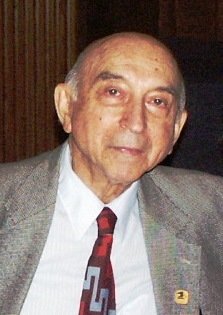
Lotfi Aliasker Zadeh was born on 4 February 1921 in Baku, then a roaring oil capital in the young Soviet Azerbaijan. His father, Rahim Aleskerzade, was an Iranian Azerbaijani journalist from Ardabil, posted to Baku as a correspondent; his mother, Fanya Korenman, was a Jewish paediatrician from Odessa. Lotfi grew up speaking Russian and Azerbaijani in a comfortable, book-filled home, and later said the Baku years — roughly ages seven to ten — left the deepest mark on him.
In 1931, as Stalin’s state tightened its grip on foreign nationals, the family used the father’s Iranian citizenship to leave for Tehran. Lotfi was ten. He would not see Baku again for decades — yet he never stopped calling himself, among other things, a son of the city.
A question of identity
Few scientists have been claimed by so many nations — and few resisted the claiming so gracefully. Zadeh held the two framings together without contradiction:
His own words
“The question really isn’t whether I’m American, Russian, Iranian, Azerbaijani, or anything else. I’ve been shaped by all these people and cultures and I feel quite comfortable among all of them.”
Azerbaijan’s claim
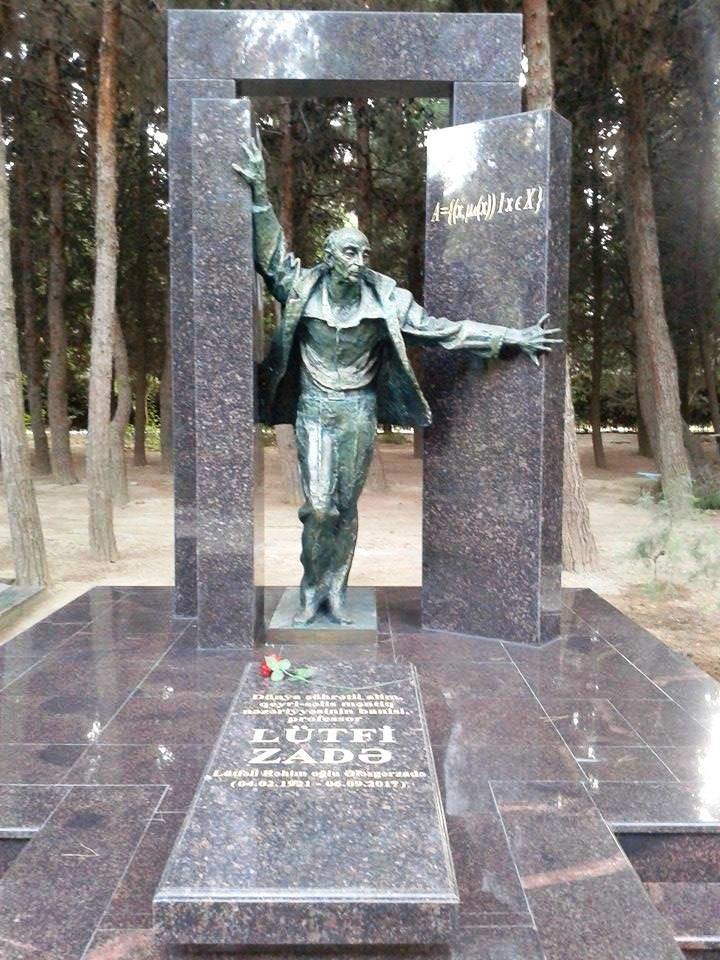
To Azerbaijan he remained, proudly, one of its own — the boy from Baku who conquered world science. He is buried in the country’s Alley of Honour, and a centenary stamp bears his face.
Sources also differ on the spelling of his name — Aliasker, Aliasger, Asker — and on its Azerbaijani form, Lütfi (or Lütfəli) Rəhim oğlu Ələsgərzadə. We note the variants rather than choosing one as definitive.
Tehran: an American school in Persia
In Tehran, Lotfi was sent to Alborz College, a Presbyterian missionary school, where he learned English and Persian and absorbed what he called “the best that you could find in the United States.” He excelled, and in 1942 graduated in electrical engineering from the University of Tehran — one of only three engineers in his class, having placed near the very top of the national entrance exams.
By then the Second World War had brought Allied troops to Iran, and the wider world felt suddenly reachable. In 1944, at twenty-three, Zadeh sailed for the United States.
America: MIT and Columbia
He arrived as the war was ending and went straight to MIT, taking his master’s in electrical engineering in 1946. That same year he married Fay, who would remain his partner for seventy years. He moved to Columbia University, where under John R. Ragazzini he earned his doctorate in 1949 with a thesis on the frequency analysis of time-varying networks.
Columbia kept him on the faculty, and by 1957 he was a full professor. With Ragazzini he co-developed the z-transform, still a workhorse of digital signal processing. But the work that would define him lay ahead, on the other side of the country.
Berkeley: fifty-eight years
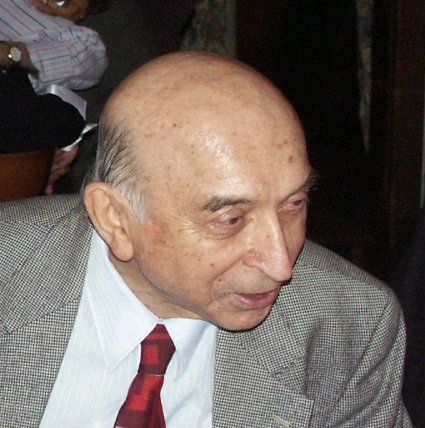
In 1959 Zadeh joined the University of California, Berkeley. He never left — he taught and researched there for fifty-eight years, until his death. As department chair from 1963 to 1968 he helped fold computer science into electrical engineering, building the famous EECS department and helping make Berkeley a world centre of computing.
And there, in the summer of 1964, the central idea of his life arrived — by his account, almost casually, while a dinner was cancelled and he was left alone with his thoughts. The result, published the next year, was fuzzy set theory.
The man himself
Colleagues remembered a courteous, relentlessly determined man who took fierce criticism without flinching. He kept in his study a sign reading “ODIN” — Russian for “alone” — a private emblem of independent thought. “Obstinacy and tenacity,” he once said, “not being afraid to get embroiled in controversy… that’s part of my character. I can be very stubborn. That has probably been beneficial for the development of fuzzy logic.”
He was also a serious photographer, making portraits of eminent scientists and engineers, and he kept working — publishing, arguing, refining — until the very end, at ninety-six.
“The question really isn’t whether I’m American, Russian, Iranian, Azerbaijani, or anything else. I’ve been shaped by all these people and cultures and I feel quite comfortable among all of them.” Lotfi A. Zadeh
Berkeley to Baku
Lotfi Zadeh died at his Berkeley home on 6 September 2017, aged ninety-six. On 29 September he was buried in the First Alley of Honour (Fəxri Xiyaban) in Baku, the resting place of Azerbaijan’s most honoured figures; President Ilham Aliyev attended the farewell. Over his grave stands a bronze figure with arms thrown wide — and carved into the granite beside it, the definition that changed everything: the formula of a fuzzy set.