The engineer who taught machines
to reason in shades of grey.
1921 — 2017
As complexity rises, precise statements lose meaning, and meaningful statements lose precision.
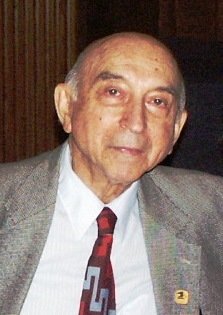
L. A. Zadeh, Berkeley, 2005
In 1965 a Berkeley professor — born in Baku to an Azerbaijani father and a Russian-Jewish mother, schooled in Tehran, trained at MIT and Columbia — published a thirteen-page paper called “Fuzzy Sets.” It proposed something heretical to classical logic: that an object need not simply belong or not belong to a set, but could belong partly, to a degree between 0 and 1. Ridiculed at first, the idea now runs inside subway brakes, cameras, washing machines, medical devices and the foundations of modern AI. It is among the most-cited scientific papers ever written.
Baku, Tehran, New York, Berkeley — and a man who refused to be reduced to any single nationality.
Open 02Membership functions, linguistic variables, computing with words — explained from scratch, with a live demo.
Open 03The IEEE Medal of Honor, a quarter-million citations, a bronze statue in Baku, a postage stamp, a Google Doodle.
Open